July 23, 2015 • Blog, The Power 50, Uncategorized
There’s an ominous title at the top of MLSE’s entry to Canada’s top marketing awards, the 2015 CASSIES.
“Uniting an indifferent fan base of 35 million,” reads the subheading of the entry for the “We The North” campaign.
“To many Canadians, the Toronto Raptors brand was devoid of meaning. While we proudly wore the Toronto name since 1995, the team wasn’t yet a fixture in national culture like the Leafs.” The blunt reality of where the Toronto Raptors were a little over a year ago in the minds of Canadians appeared to be a daunting task to reverse.
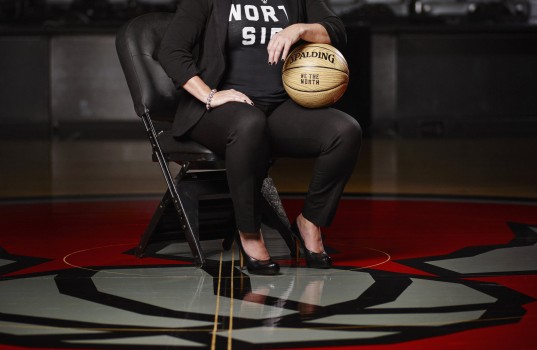
That job fell on Shannon Hosford’s desk. As the vice president of marketing and communications at Maple Leaf Sports & Entertainment (MLSE), she needed to turn the tide on how Canadians viewed the Raptors, not to mention the disdain towards the Toronto Maple Leafs and fading support of the Toronto FC. But daunting, Hosford says, is not the word she would use. “I would say exhilarating task,” she corrects, without a hint of sarcasm. She stops short of calling the success of the “We The North” campaign part of a perfectly mapped-out plan.
Because it wasn’t.
“We The North” was in the cards, they had decided on the branding in December 2013. However, it was scheduled to move into gear at the beginning of the 2014-15 season, part of a five-year re-branding plan for the Raptors, which also included Toronto rapper Drake as the team’s “global ambassador” and securing the 2016 NBA All-Star Game. No one could have predicted that the team would turn around as quickly as it did. The 2013/14 season was supposed to be a building year. That indifferent fan base had endured a roller coaster season. In the valley, the honeymoon with Rudy Gay was over and he was sent packing. But then the team went on a run, and point guard Kyle Lowry became an unlikely all-star starter. The Raptors found themselves atop the Atlantic Division, heading into the first round of the NBA playoffs against the Brooklyn Nets.
In a playoff-starved city like Toronto, the excitement was palpable. For Hosford, the time to hit reset on the Raptors image had arrived, albeit a few months ahead of schedule. “We worked day and night,” Hosford said of the two-week sprint to launch the Raptors rebrand. As she puts it, MLSE was “all in.”
As the master brander of a three-headed monster (four if you include the Toronto Marlies), Hosford says the job is a “lifestyle” choice. There are no hours, at least none that she can describe. “With the technology, it just never ends,” she says.
Hosford has been a part of MLSE since the turn of the millennium. She started out at global partnerships for MLSE and rode the ranks. The arrival of Tim Leiweke in 2013 ushered in a revival of Toronto sports franchises, although it can be argued that the wins off the field have yet to translate to playoff wins.
The “It’s a Bloody Big Deal” campaign, which launched with the signing of Jermain Defoe, was a hit as an advertisement. But Defoe never hit his stride in Toronto. The former English Premier League player looked indifferent on the field, and the FC missed the playoffs again. “We needed, at that point, to make a big play for TFC,” Hosford says of Defoe, trying to salvage the on-the-field failure as a building block to this year’s standout, former Serie A Juventus player, Sebastian Giovinco. This June, the U.K. newspaper The Guardian dubbed Giovinco “the Toronto FC star Jermain Defoe never was.”
As for the Raptors, the “We The North” mantra has been soaked up, and even flown on a flag at Toronto’s City Hall. Maple Leafs Square is renamed Jurassic Park on Raptors nights. The rest of the NBA took notice, so much so that the Brooklyn Nets even called out their own fans, tweeting out “#Nets fans take note — this is what a playoff crowd looks like.”
Even on days where, by all appearances, the interests of MLSE are in clear conflict, Hosford doesn’t relay any real turmoil. Take, for example, May 20, 2015. The Toronto Argonauts announced they had been bought by Larry Tanenbaum’s Kilmer Group (Tanenbaum owns 25 per cent of MLSE and is their chairman). The announcement came on the same day that Mike Babcock gave a deadline for his next coaching position in the NHL.
Hosford said she was by no means pulled in different directions. “Yes, the phone’s melting, but everyone knows the task at hand.”
Those tasks are not easy ones. The five-year Raptors rebrand may have blossomed a little early, but the “We The North” mentality has stuck, uniting a fan base with an “outsider” commonality, and bringing the 29 million people outside of Toronto closer to the Raptors than ever before. The last time that happened, it was with the “I Am Canadian” beer commercials.
“It not only hit a chord with basketball fans it hit a chord with Canadians,” Hosford said. “I see ‘We The North’ everywhere, and not just in basketball. It’s part of Canadian culture now.”
Maple LeafsShannon HosfordThe Power 50Toronto RaptorsWe The North
Related Posts
« 23. Michael Budman & Don Green 25. Steve Nash »