50. Vanhawks
Every world-class city has its own set of problems, Toronto included. While the city continues to grow and thrive, the issue of pedestrian deaths at the hands of automobiles is a growing dilemma that calls for some much-needed attention.
That said, Toronto has taken some steps to make the roads safer. Since 2000, the city has painted “zebra markings” at more than 1,000 intersections, installed 77 red-light cameras and lengthened traffic light intervals at some of the most hazardous junctions. Most recently, Ontario passed legislation increasing penalties for drivers who text or use a hand-held phone while on the road, and who open their door into the path of a cyclist.
But none of these measures has had a lasting effect on the number of fatalities. According to recent statistics,Toronto is on course to mark its deadliest year for pedestrians in more than a decade. So, the question begs:how can we make cycling safer?
One company believesthe solution is in smarter bikes.
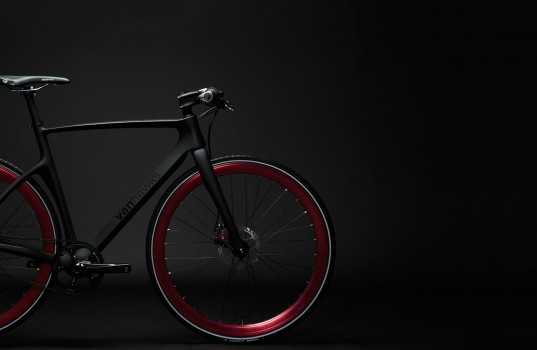
The Canada-based co-founders of the Vanhawks Valour claim to have designed the “first smart, connected bicycle,” which gives riders directions as well as alerts to prevent them from cycling into dangerous situations.
It all started in 2015 when the team at Vanhawks was able to raise over $820,000 on crowdfunding platform Kickstarter for prototypes and development. The result? The Valour smartbike, a technical wonderland that comes with a number of built-in technologies, including a blind spot detection system that notifies riders when a car gets too close to the bike and a GPS-tracking accelerometer.
When you hook up the bike to the smartphone app, the navigation system works with Google Maps. But instead of requiring riders to look away from the road to read the map, the handlebars are fitted with small blue lights that flash left or right to tell you when to turn
In addition, the Valour is connected to a network of bikes that collects data from other riders to help navigate the city, including a database of blocked lanes and potholes. It also helps with one of the biggest problems riders face: bike theft.
How it works is the Valour connects to a rider’s smartphone, and together, all the bikes in a particular city make up a connected network. If a Valour bike is stolen, its owner can send a “loss notification” on the companion app. Once the notification has been sent out, the stolen bike will send out updates about its location to both the owner and other cyclists with six kilometres from the bike who may be able to help recover it.
Beyond the tech, the bike also features a carbon-fibre unibody frame, which the company says comes from a proprietary manufacturing process.
Each bike frame is moulded as a single piece, but instead of creating a hollow frame, which is commonly used for carbon fibre bikes, the structure features internal walls at stress points for added strength.
This feature is modeled on the structure of human bones and is one of many elements of the design influenced by the medical background of a member of the Vanhawks team, who dropped out of a PHD in biodynamics to focus on the project.
Related Posts
« 49. Ryerson DMZ What’s Happening On Bay Street This Week? »

